Hashing vs. Encryption: What’s the Difference in 2027 | Infographic
A stored password, a card number in transit, a patient record, a contract, each is data that must stay private and accurate. Organizations now hold far more of it than they did a few years ago, and protecting it depends on data security techniques matched to the task.
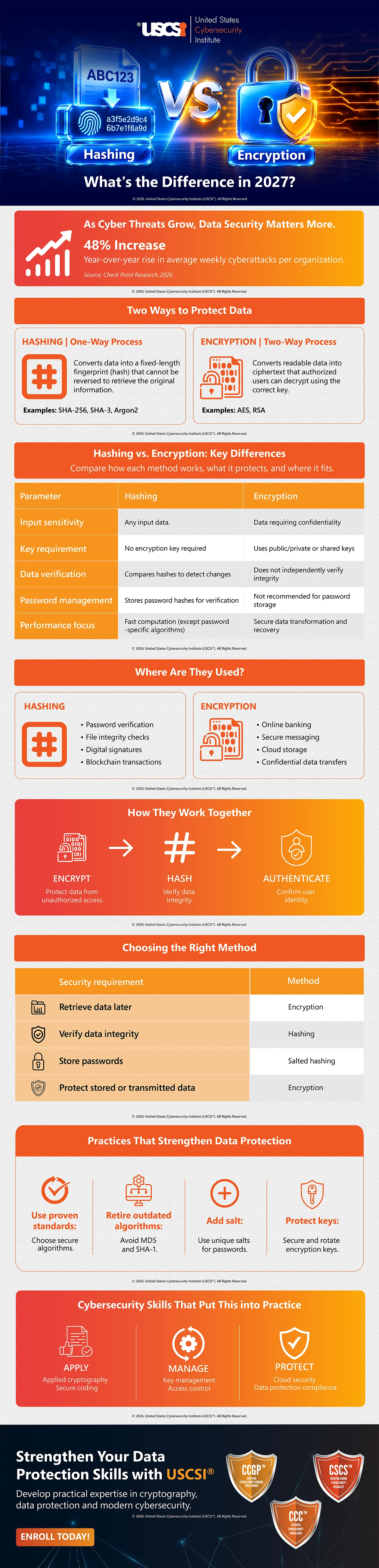
Hashing and encryption handle two different tasks, which is why Encryption vs. Hashing is a frequent topic for security teams. Hashing passes data through a one-way function and produces a fixed-length fingerprint. If the fingerprint changes, the data has changed, and a stored password never needs to be kept in readable form. Data encryption works in both directions. It turns readable information into ciphertext, and a holder of the correct key can restore the original.
Current practice shows room to grow. The 2026 Thales Data Threat Report found that 47% of sensitive cloud data is encrypted, so broader coverage remains an open opportunity.
Expanding that coverage depends on professionals who know which method fits each situation, from payment systems to cloud storage. Certified cybersecurity professionals build that judgment through practice, and strong cybersecurity skills keep it current as standards change. To understand in detail, the infographic below shows how each method works and where the two differ.