The Double-Edged Sword: 5 Benefits and Risks of AI in Cybersecurity | Infographic
AI cybersecurity is revolutionized by artificial intelligence, with benefits such as quicker detection, intelligent response to threats, and adaptive defenses. The need for more sophisticated cyber threats has heightened the importance of organizations using AI for cybersecurity to process vast amounts of data and detect potential anomalies in real time.
Gartner predicts that global information security spending will grow by 13.3% to USD 244.2 billion in 2026, with agentic AI oversight emerging as the leading trend for the year in cybersecurity.
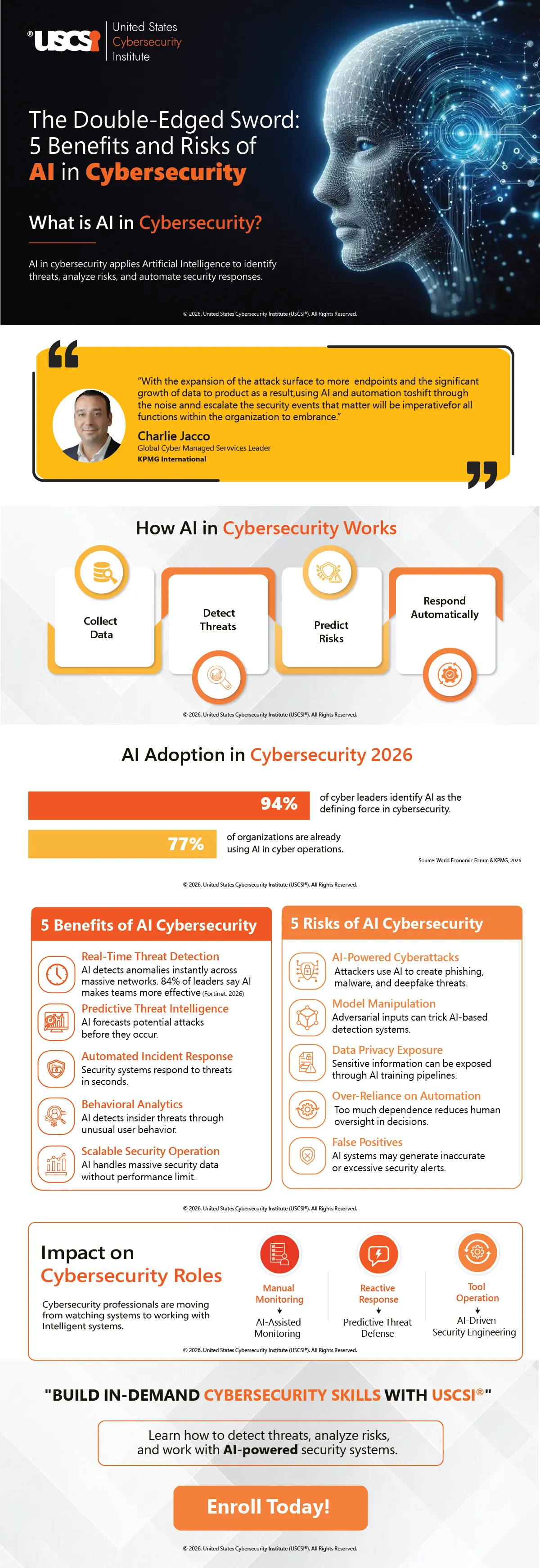
The automation of threat detection and quick response time are among the primary advantages of using AI in cybersecurity, which helps to alleviate the strain on security teams. AI is also improving predictive intelligence, where computers can help organizations predict attacks before they escalate further.
But there are also risks associated with AI in cybersecurity, such as the potential for adversarial attacks, model poisoning, and relying too heavily on automated systems. Therefore, strong AI risk management is critical to enterprise security frameworks.
The transition requires cybersecurity experts to acquire practical skills through cybersecurity tools, cybersecurity platforms with artificial intelligence, and structured cybersecurity certifications to ensure ongoing education and learning. The robust cybersecurity career now requires security knowledge and AI-powered skills.
To better understand the importance and impact in 2026, the infographic below outlines the top 5 benefits and biggest risks of AI in cybersecurity.