AI Risk Management: What Enterprise Leaders Must Address in 2026
Enterprise adoption of AI technologies has outpaced the governance infrastructure required to manage it responsibly. Companies in all industries have introduced AI into their business processes such as automated decision systems, generative productivity tools, AI-powered SaaS applications, and others, but have yet to implement the governance framework required by their material risks.
The State of AI Risk Management 2026 report found that 86% of organizations state they have a complete inventory of AI yet 59% admit that they have shadow AI that is not governed. For enterprise leaders, the gap is no longer a technology problem. It is a strategic liability.
In this blog, we will understand what AI risk management is, the risk categories enterprise leaders must govern, the governance framework required to address them, and the credential standards that define qualified leadership in this function.
What Is AI Risk Management?
AI risk management is the structured discipline of identifying, assessing, and controlling the technical, operational, regulatory, and ethical risks that arise when artificial intelligence systems are deployed within an organization.
Unlike conventional IT security, it governs risk across the full AI lifecycle, from model development and training through deployment, monitoring, and decommissioning, each phase introducing distinct failure modes including model drift, hallucinated outputs, data pipeline exposure, and autonomous decision-making without human oversight. In 2026, it functions as a standalone executive-level governance discipline, not an extension of IT operations.
The AI Risk Surface Enterprise Leaders Must Understand
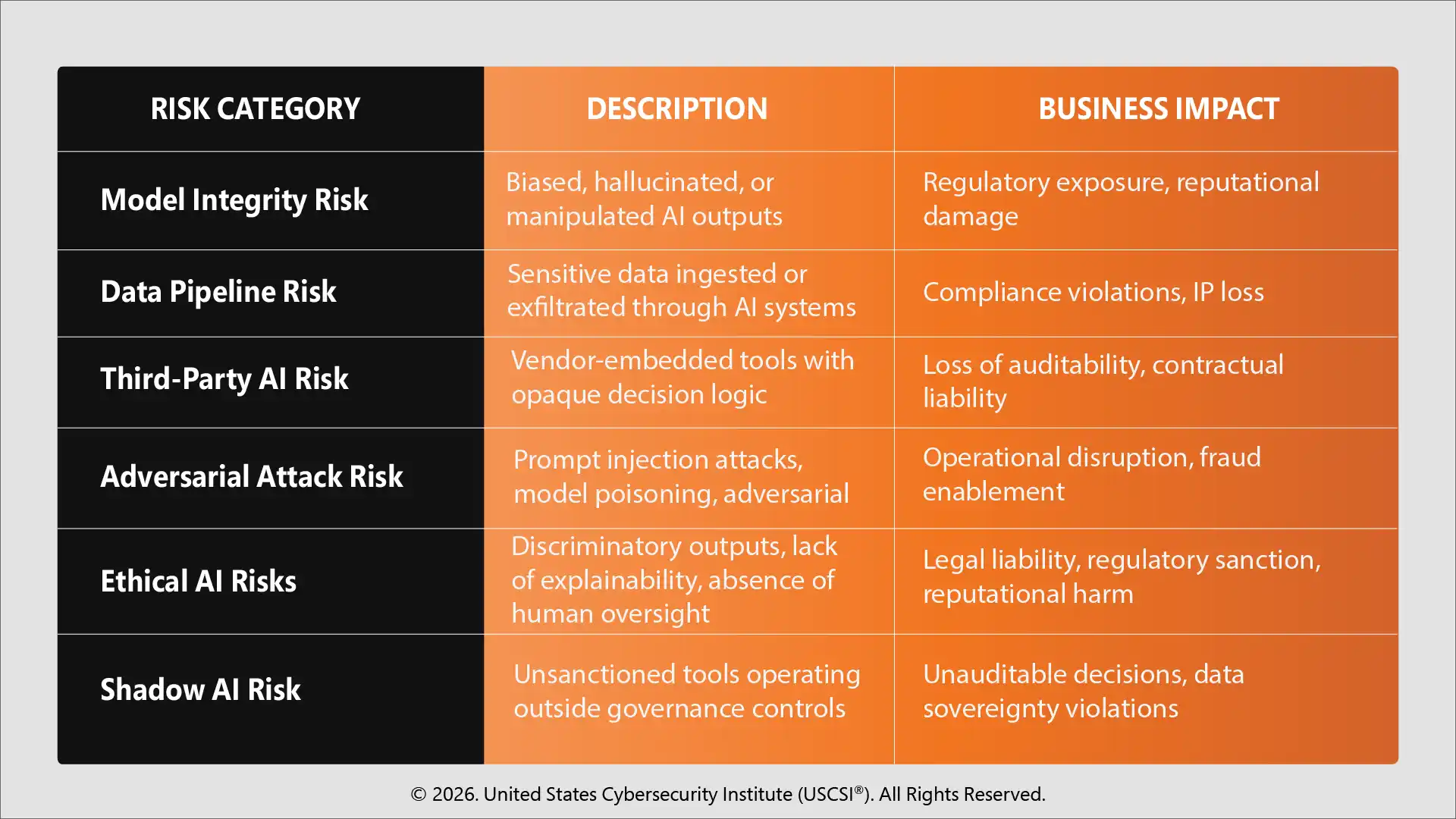
The risk surface introduced by AI technologies is broader than most boards currently account for. Each category below carries distinct detection requirements and cannot be addressed through a single governance policy.
For organizations conducting structured baseline assessments, USCSI® Cyber Risk Assessment: The Complete Guide for Security Leaders provides a rigorous methodology applicable across both conventional and AI-augmented threat environments.
Four Pillars of Enterprise AI Risk Governance
AI risk governance depends on four operational pillars that convert accountability in the executive suite into measurable, enforceable controls. Every pillar covers a different aspect of the risk throughout the entire AI lifecycle.
- Identify and Classify Risks
- Have an active, auditable list of all the AI technologies that are on the market, such as third party and vendor-embedded tools.
- Label each system according to the data sensitivity, decision authority, and scope of regulation throughout the entire AI lifecycle.
- Use consequences of failure to categorize risk; presume an undocumented deployment to be high risk by default.
- Governance and Accountability Structures
- Set up executive ownership, usually the CISO, Chief Risk Officer or an assigned AI governance leader.
- Create a cross-functional AI Risk Committee for legal, compliance, technology and operations.
- Ensure that all AI systems that have a significant impact on human decisions are subject to documented ethical review.
- Continuous Monitoring and Incident Response System
- Adopt model performance monitoring that can identify when output is drifting or being manipulated by an adversarial actor throughout the AI lifecycle.
- Create Incident Response Plans for AI-specific issues including isolation, rollback, and notification after a breach.
- Set detection rules for prompt-injection attacks and AI agentic activities that are not within specified limits.
- Run AI-specific structured red teaming quarterly.
- Regulatory Alignment
- Implement a well-established AI Risk Management Framework, such as NIST AI RMF for U.S. businesses or ISO/IEC 42001 for global standards.
- Identify all active AI deployments, and map them to EU AI Act obligations, NIST AI RMF, HIPAA, and FFIEC.
- Incorporate explainability, auditability and ethical AI risk requirements as standard terms of vendor procurement processes.
The CISO's Role in AI Risk Ownership
The CISO function already owns technology risk, regulatory compliance, and operational continuity, making it the logical home for AI risk governance. Extending that mandate requires a structured understanding of how AI-native threat vectors, including prompt injection attacks and model manipulation, differ from conventional cybersecurity risks.
For organizations still formalizing that leadership function, the USCSI® insight on why every organization needs CISO-level cybersecurity leadership documents the operational consequences directly: without executive-level security ownership, AI risk governance defaults to fragmented decisions made by teams without the authority or framework to manage outcomes at scale.
AI Risk Maturity Levels Every Enterprise Leader Must Evaluate
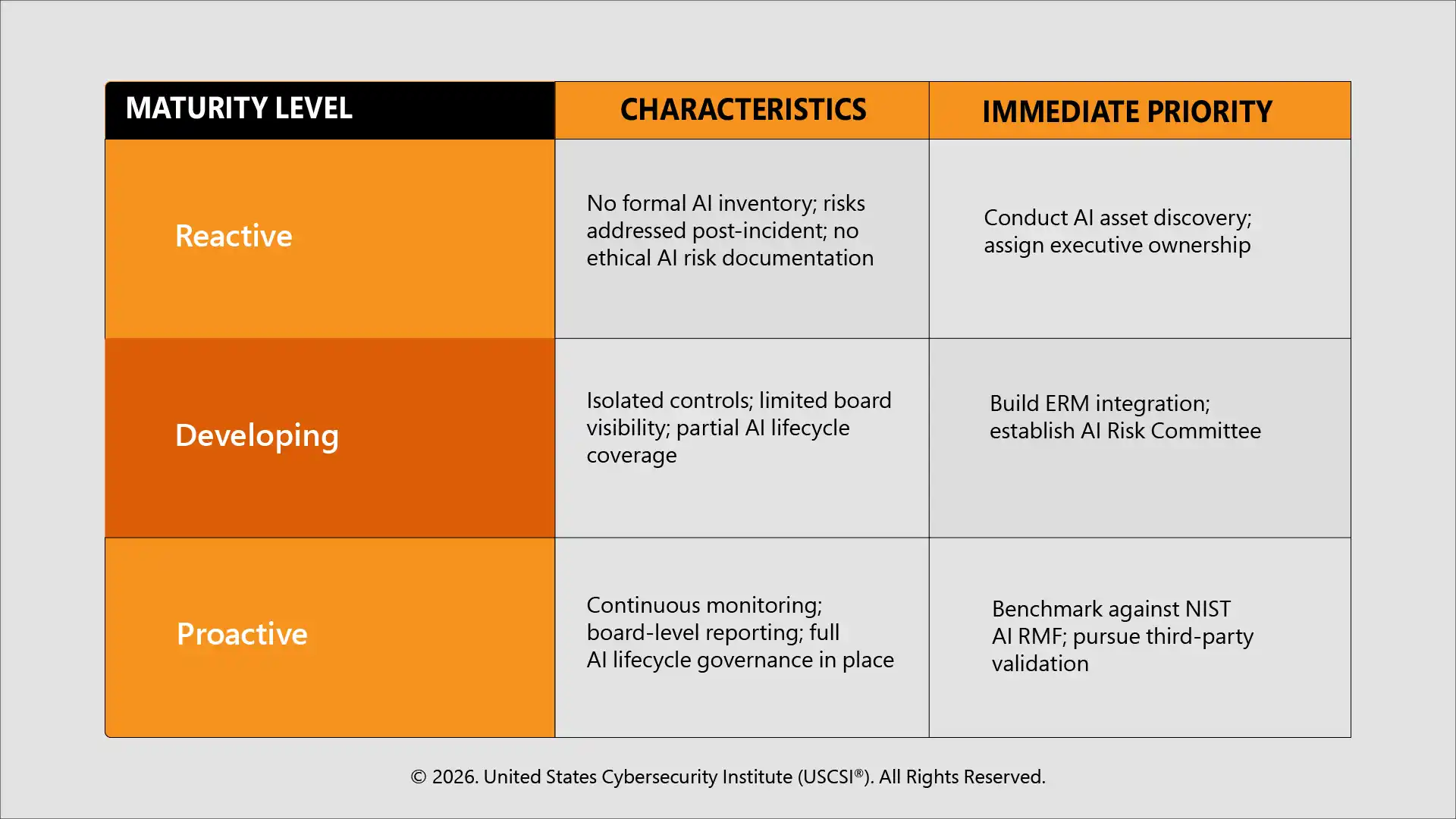
Applying a structured AI Risk Management Framework requires an honest assessment of where the organization currently stands. Most enterprises occupy one of three maturity positions.
Why Certification Standards Matter in AI Risk Roles
As AI risk management functions mature, credentials held by senior practitioners face increasing scrutiny from boards, auditors, and regulators. The expectation has shifted from years of experience to demonstrated competency across AI technologies, governance frameworks, and advanced threat domains including ethical AI risks and adversarial attack vectors.
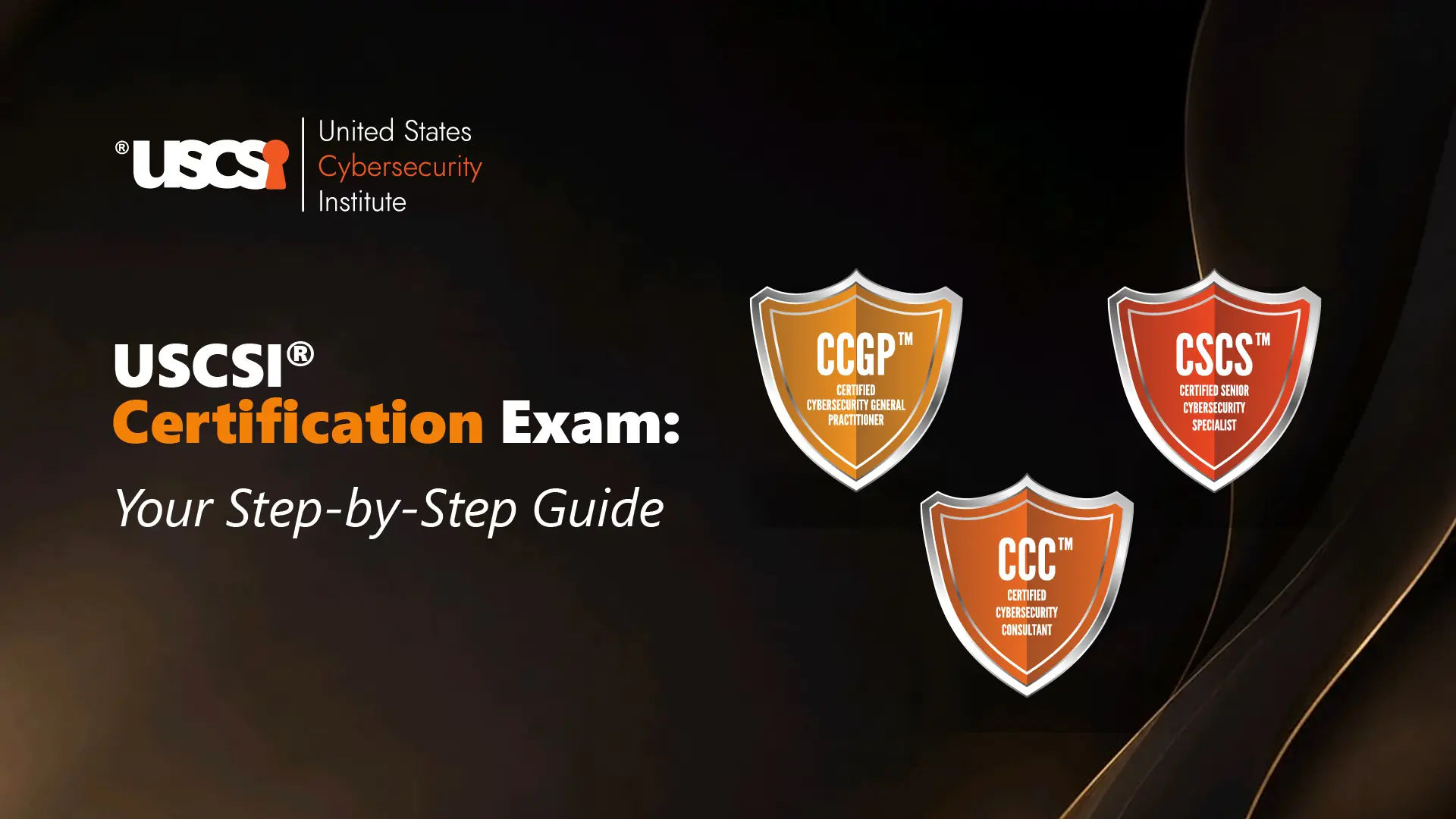
The CSCS™ cybersecurity certification from USCSI® covers advanced threat management, AI Risk Management Framework application, incident response architecture, and compliance strategy, the precise competency set required to lead an enterprise AI risk function. CSCS™-certified professionals deliver a verified knowledge baseline that materially reduces the time required to establish effective governance across the full AI lifecycle.
Conclusion
AI risk management is not a framework organization deploy once and consider resolved. As AI technologies evolve, the risk surface expands, introducing new ethical AI risks, regulatory obligations, prompt injection attack vectors, and agentic behaviors that governance structures must continuously address.
Enterprise leaders who treat AI risk management as a permanent operational discipline, grounded in a recognized AI Risk Management Framework and led by credentialed personnel, will manage exposure before it becomes a consequence.
FAQs
What specific skills define an effective enterprise AI risk professional?
Competency in prompt injection attack defense, AI data pipeline security, ethical AI risk assessment, and regulatory mapping is essential for this role.
What is the most critical AI risk trend enterprise leaders must address in 2026? Agentic AI systems operating without human approval represent the highest-priority emerging risk that most enterprise governance frameworks have not yet accounted for.
Does USCSI® Institute offer any discounts on the CSCS™ certification for working professionals or enterprise teams?
Yes, under the Turbo-Cert Pro program, USCSI® recognizes Fortune 500 organizations and top global enterprises, making professionals from these organizations automatically eligible for discounts of up to 10% on certification fees.