Why Learning Cybersecurity Matters? The 2026 Perspective
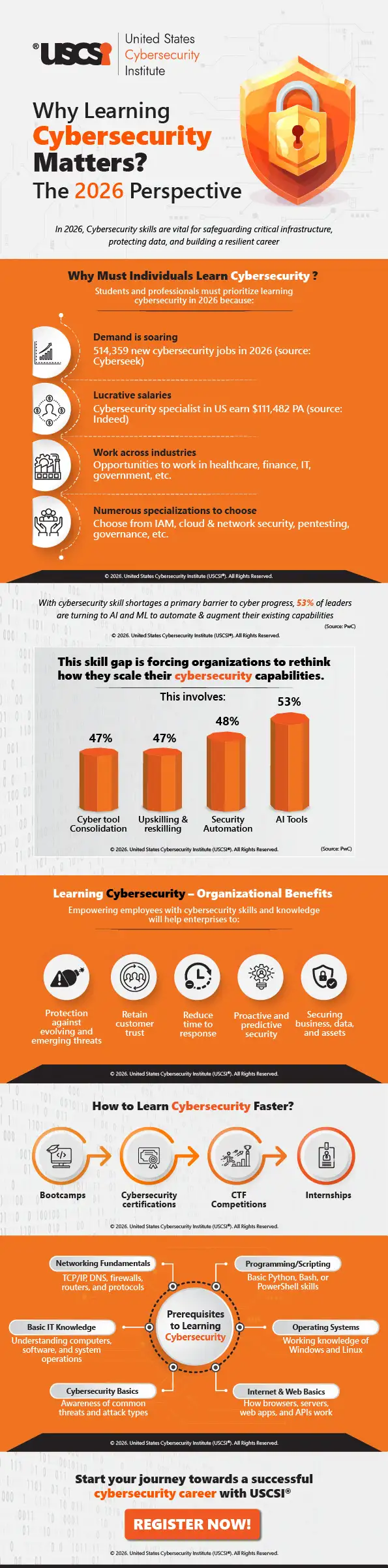
With organizations accelerating digital transformation, cybersecurity has been included among the most important priorities within an organization’s business operations. In 2026, cyberthreats are expected to grow both in terms of volume and sophistication, targeting cloud environments, critical infrastructure, and sensitive data across industries. This makes cybersecurity skills essential for safeguarding digital assets.
One of the strongest reasons to learn cybersecurity is the persistent global skills shortage. According to a recent survey by PwC, over half, i.e., 53%, of leaders are considering leveraging AI and ML to automate and augment their existing capabilities, thereby enhancing their cybersecurity posture.
Organizations are looking for skilled and trained cybersecurity professionals who can manage risks, respond to incidents, and implement modern security frameworks like Zero Trust. As a result, cybersecurity professionals are in high demand, enjoy competitive salaries, and benefit from strong job stability.
Cybersecurity offers variety of cybersecurity career opportunities across sectors such as IT, finance, healthcare, government, and manufacturing. Professionals can choose from multiple specializations for their cybersecurity jobs, including cloud security, threat intelligence, identity management, and governance, risk, and compliance.
On top of that, organizations can reduce incident response time, protect customer trust, and manage risks proactively. With so many benefits, learning cybersecurity is beneficial for both professionals and enterprises. Check out the infographic below to figure out how you can learn cybersecurity faster with USCSI® certifications.