Incident Response vs Disaster Recovery: Key Differences Explained
Cybersecurity is a vast domain, and it is not confined only to preparing for future attacks, but responding to attacks, and ensuring the normal continuation of business operations after the attack is contained. For this, incident response and disaster recovery are two important components of cybersecurity, which are often used interchangeably but are two distinct gears.
Let’s begin by understanding the basic differences – Incident response vs. Disaster recovery.
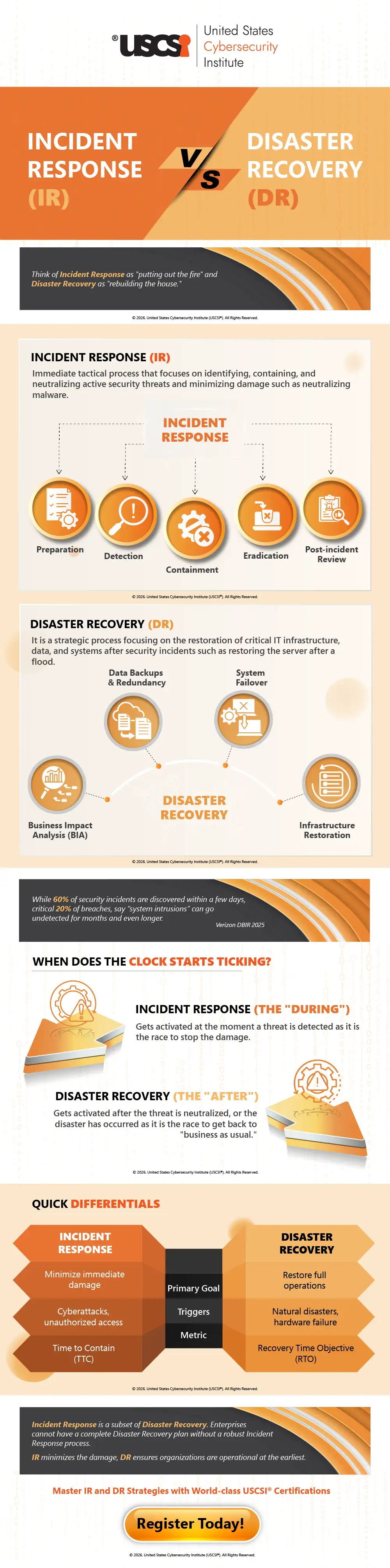
Incident response is the first line of action in case there is any security event or attack. It is a tactical defense process. It is triggered when any cyber-attack, unauthorized access, or anomaly in systems is detected. The primary goal is to identify, contain, and neutralize threats, be it ransomware, malware, data breaches, etc., before they escalate.
On the other hand, disaster recovery is a strategic process with the primary goal of restoring business operations after an attack is contained. Be it server failure because of hardware issues, impact of a natural disaster, or any cybersecurity incident, disaster recovery ensures the organization’s IT infrastructure and data are restored in a timely.
The hook – organizations need both.
An organization is not fully secure with just one. While incident response strategies contain damage, disaster recovery ensures timely restoration and business continuation. With USCSI® cybersecurity certifications, professionals can master the core strategies and processes to keep their infrastructure, data, and systems secure.