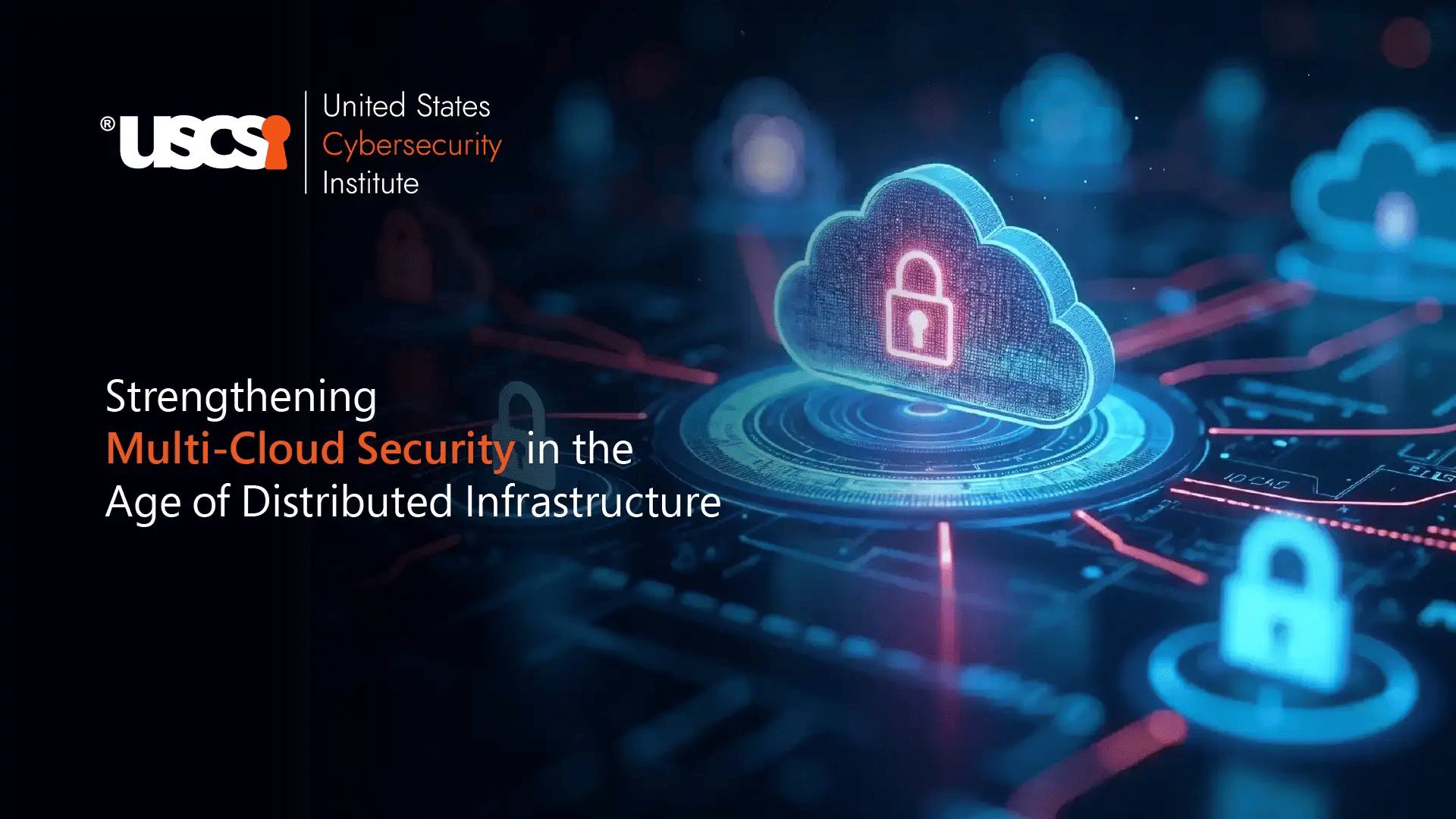
Multi-Cloud Security Explained: Benefits, Risks, and Solutions
Most enterprises no longer run on a single cloud. They run on multiples, often without a clear plan for securing them together. Fortinet's 2026 Cloud Security Report found that 88% of organizations now operate across hybrid or multi-cloud environments, up from 82% the year before, with 81% relying on two or more cloud providers for critical workloads. The security models built for a single-cloud world are not designed to handle that kind of spread.
"By 2026, organizations will move beyond single-cloud dependence, adopting distributed multi-cloud architectures to strengthen resilience against geopolitical and technical disruptions."
Avi Shua, Co-Founder & Chief Innovation Officer, Orca Security
This blog looks at what multi-cloud security actually involves, why organizations are moving toward this model, and the risks that come with it, along with the strategies and best practices that help security teams keep pace with an attack surface that keeps growing faster than most defenses can manage.
What Is Multi-Cloud Security?
Multi-cloud security is the set of policies, tools, and practices organizations use to protect data, applications, and workloads spread across more than one cloud provider, often alongside on-premises and SaaS systems. Unlike single-cloud security, it has to account for different identity systems, configurations, and compliance requirements at once.
For most organizations, this is no longer a transitional phase. It is the standard operating model now.
Benefits of Multi-Cloud Security for Complex Infrastructures
A well-implemented multi-cloud security strategy delivers measurable advantages beyond simply spreading risk as listed below.
- Improved Risk Management
Distributing workloads across multiple environments reduces exposure and allows organizations to shift operations quickly in case of a breach or outage.
- Enhanced Compliance
Multi-cloud security simplifies data governance, generating audit-ready reports aligned with regulatory frameworks across every provider in use.
- Centralized Monitoring and Control
A unified interface to monitor threats, enforce policies, and manage user access replaces the overwhelming task of securing each platform separately.
- Reduced Vendor Lock-In
Spreading workloads across providers gives organizations the flexibility to choose the best-fit solution for each use case without being tied to a single vendor.
- Optimized Workload Protection
Intelligent policy enforcement and real-time visibility keep workloads consistently protected against evolving threats and misconfigurations.
- Scalability With Layered Security
Identity access controls, encryption, and micro-segmentation allow infrastructure to scale without weakening the overall security posture.
Also read USCSI® insights on Multi-Cloud vs Hybrid Cloud: Choosing the Right Architecture for Modern Enterprises. A breakdown of the architectural differences between multi-cloud and hybrid cloud, helping enterprises choose the right model for their infrastructure needs.
The Biggest Risks Across Multi-Cloud Environments
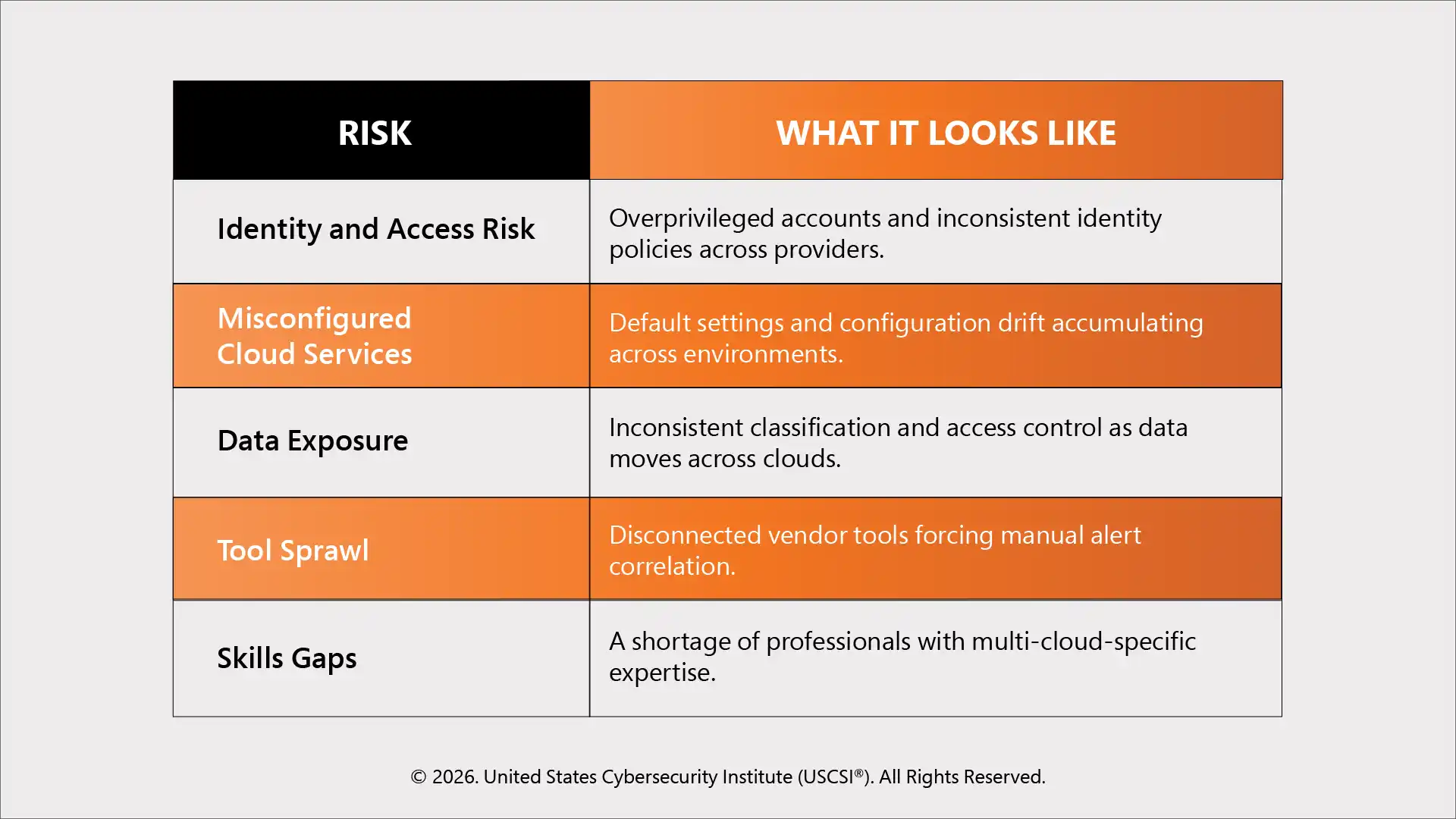
A breach across multi-cloud infrastructure rarely starts and ends with one vulnerability. It typically follows a chain, including a misconfiguration exposing a resource, an overprivileged identity enabling access, and sensitive data becoming the final target.
Listed below are the risks that consistently put multi-cloud environments at risk.
How to Build a Strong Multi-Cloud Security Posture
Strengthening security across complex, multi-provider infrastructure depends on a handful of foundational areas working together rather than in isolation.
Listed below are the core building blocks that make up a strong multi-cloud security posture.
- Consolidate Around Unified Platforms
Security teams benefit from platforms that bring together and correlate network, cloud, and application security, rather than using disparate tools from different vendors with different data models․
- Apply Zero Trust as a Default Operating Model
As identity and access security is the primary risk category‚ all access requests are considered unverified by default‚ regardless of location․ This is a response to the core problem․
- Closing the Visibility Gap Across Providers
Each cloud has its own console, identity model, and default configuration patterns. For a complete view, observability and signal correlation across environments may need to be centralized․
- Move Automation Beyond Alerts
While most organizations have added some automation to their cloud security workflows, these projects usually end at notification rather than remediation. This is an important gap to close because attackers are now operating at machine speed․
- Segment Networks to Limit the Radius
In a multi-tender setup, the network boundaries between providers make up part of the attack surface. Network segmentation means that only a single instance is compromised and not the whole organization․
Also Read: How to Build a Career in Security Architecture in 2026. Multi-cloud expertise is one of the core building blocks behind a strong security architecture career. Understand the skills, certifications, and career path to get there.
Way Forward
Multi-cloud is now the default operating model for the modern enterprise, and the complexity it brings is permanent. The organizations closing the gap are not necessarily spending more. They are consolidating tools, applying zero trust consistently, and building the in-house expertise to manage identity, configuration, and data risk as one connected system.
For professionals looking to build that expertise, multi-cloud security is one of the most valuable skill sets to invest in right now. USCSI® cybersecurity certifications are built around exactly this kind of applied, in-demand security knowledge, helping professionals develop the capabilities multi-cloud environments require and position themselves for the roles organizations are actively hiring. Start your learning journey today.
FAQs
What jobs are in demand for multi-cloud security professionals?
Roles including Cloud Security Engineer, Cloud Security Architect, Identity and Access Management Specialist, and Cloud Security Analyst are among the fastest-growing positions in this space.
What is the biggest trend shaping multi-cloud security in 2026?
Consolidation around unified security platforms, replacing fragmented point solutions, is the clearest trend defining the space in 2026.
Do multi-cloud environments increase security risk compared to single-cloud setups? Yes. Each provider adds its own identity system and configuration defaults, expanding the attack surface and making consistent visibility harder to maintain.