Kubernetes Security Explained: Architecture, Risks, and Defense Strategies
Kubernetes has become the operating system of the cloud, and that scale comes with a cost. According to Fortinet's 2026 cloud security data, 90% of organizations have experienced a Kubernetes security incident, a number that places Kubernetes security architecture at the center of nearly every conversation about cloud-native risk.
In this blog, we will break down what Kubernetes security actually means, where it applies across the stack, common mistakes to avoid, and the practices and roles shaping how teams defend their clusters in 2026.
What Is Kubernetes Security?
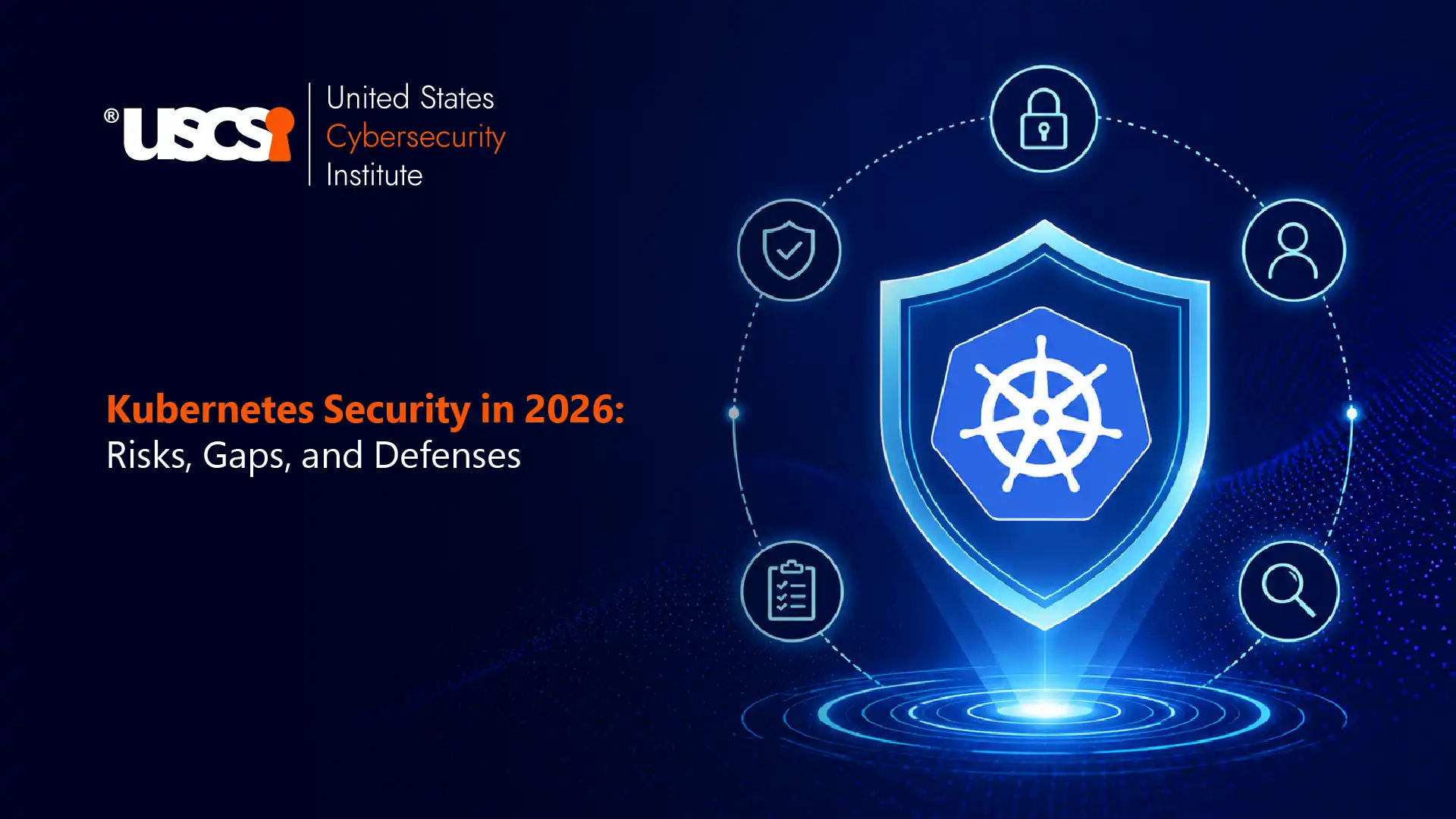
Kubernetes security refers to the layered set of practices, configurations, and controls used to protect containerized workloads, the orchestration layer managing them, and the infrastructure they run on. In practice, this definition breaks down into a few core characteristics:
- It spans the API server, pod-to-pod traffic, nodes, and the control plane, not just the containers themselves.
- It follows Kubernetes' own structure, covering the control plane, data plane, and workloads as distinct zones of responsibility.
- It requires teams to design their own enforcement architecture, since Kubernetes does not ship with built-in policy coordination.
- It increasingly draws on zero trust security principles, treating every request, pod, and service as untrusted until verified
Why Does Kubernetes Security Matter in 2026?
According to the CNCF Annual Cloud Native Survey 2026, 82% of container users are now running Kubernetes in production, making it the default operating layer for modern infrastructure. That scale is exactly why security can't be an afterthought; a misconfiguration or exposed API does not just affect one application, it affects the platform nearly every production workload now runs on.
The pattern across most incidents is not sophisticated zero-day exploits. It is misconfiguration, exposed APIs, and weak identity and access management (IAM), the everyday gaps attackers have learned to scan for automatically.
Where Does Kubernetes Security Apply?
Kubernetes security architecture is not confined to a single layer or team. It spans the entire stack, as explained below.
Infrastructure
The cloud infrastructure underneath Kubernetes needs hardened operating systems, strong IAM controls, and encrypted storage. A weak foundation makes the cluster weak by extension.
Application
Excessive permissions and exposed ports at the orchestration layer create direct entry points. Default kubelet ports left open have historically been a documented attack vector.
CI/CD
Since Kubernetes deploys code continuously, pipelines need image scanning, configuration validation, and signed manifests to keep vulnerable images out of production.
Networks and APIs
Kubernetes uses a flat network model by default, meaning pods can talk to each other freely unless explicitly restricted. Network policies, encrypted traffic, and properly configured service meshes are essential here. This is also where zero-trust principles tend to matter most, treating every request and service as untrusted until verified, rather than assuming safety just because traffic stays inside the cluster.
USCSI®'s guide on strengthening enterprise security with a zero trust approach covers this shift in more depth.
Identity and Access Management (IAM)
Kubernetes ships with role-based access control, but tying it into broader enterprise IAM and single sign-on systems is where many organizations fall short.
Common Kubernetes Security Mistakes
Most Kubernetes breaches don't start with advanced exploits. They start with small, avoidable oversights left unchecked across the cluster. Listed below are a few common mistakes to look into:
- Relying on default settings that are convenient but not secure.
- Granting admin-level privileges more broadly than necessary.
- Leaving the Kubernetes API server exposed without strict network controls.
- Running containers as root, breaking the isolation containers are meant to provide.
- Storing secrets in plaintext rather than encrypting them at rest.
- Allowing unrestricted pod-to-pod communication by default.
- Under-investing in logging and monitoring, which delays breach detection.
Kubernetes Security Best Practices
Most Kubernetes security gaps have well-established fixes, and none require tooling, just consistent enforcement across the cluster. The practices that consistently close these gaps are listed below.
- RBAC paired with the principle of least privilege keeps the damage contained if any single account is compromised.
- Pod Security Admission allows teams to apply privileged, baseline, or restricted rules based on how much a workload should be trusted.
- Network policies move Kubernetes away from its open-by-default pod communication and toward explicit, deliberate rules.
- Restricting and actively monitoring access to the API server protects the cluster's most sensitive control point.
- Continuous image scanning across build, registry, and runtime stages stops vulnerabilities before they reach production.
- Regular configuration audits catch drift early, before small inconsistencies turn into exploitable gaps.
The Cost Side of Kubernetes Security
Security and cost efficiency in Kubernetes environments are more connected than most teams realize. A few patterns show up consistently across organizations managing both:
- Misconfigured resource limits and over-provisioned clusters inflate cloud bills.
- Unmonitored scaling often correlates with the same blind spots that lead to security gaps.
- Cost visibility and security discipline work best when managed together, not separately.
For organizations looking to bring both sides of that equation into one strategy, USDSI®'s Kubernetes FinOps guide for 2026 is a useful companion read.
Building the Skills Behind Kubernetes Security
As Kubernetes environments grow more complex, the professionals managing them need more than tool familiarity. It includes:
- Understanding IAM, zero trust security design, and Kubernetes security architecture is now core to the cybersecurity specialist role.
- Structured cybersecurity training programs provide a consistent foundation in access control, cloud architecture, and incident response.
For those building a cybersecurity career with cloud and architecture responsibilities in mind, USCSI®'s Certified Senior Cybersecurity Specialist (CSCS™) program covers cryptographic techniques, security leadership, business continuity, and AI implementation, the strategic groundwork that shapes how organizations prioritize and govern Kubernetes security at scale.
The Way Forward
Kubernetes security is best approached as an ongoing operational discipline, one that evolves alongside the infrastructure it protects. Organizations that build security into their architecture from the outset, supported by clear ownership, continuous monitoring, and the right skills, are well positioned to scale Kubernetes adoption confidently through 2026 and beyond.
FAQs
What is the difference between container security and Kubernetes security?
Container security focuses on individual containers and images, while Kubernetes security covers the orchestration layer, control plane, and access management around them.
What roles are responsible for Kubernetes security in an organization?
Cloud security engineers, DevSecOps specialists, and senior cybersecurity architects typically share this responsibility.
What is the role of a service mesh in Kubernetes security?
A service mesh encrypts and authenticates service-to-service traffic, enforcing security policies without changing application code.