What Is ITDR and Why Is It Critical for Modern Cybersecurity?
For a long time, cybersecurity meant protecting networks and endpoints. That focus has shifted. Identities are now one of the most targeted points of entry attackers go after. Cloud platforms, hybrid work, and a growing number of connected systems mean one stolen credential can put an attacker right inside an organization's critical resources.
Sophos' State of Identity Security 2026 report found that 71% of organizations had at least one identity-related breach in the past year. That is not a small number, and it signals that identity compromise isn't rare anymore. It's closer to routine.
This is part of why Identity Threat Detection and Response has become such a central piece of cybersecurity strategy.
Quick Answer: What Is ITDR?
ITDR is how organizations identify, investigate, and respond to threats against digital identities and identity infrastructure. The focus is on catching malicious activity on an identity account before damage is done, things like credential misuse, privilege escalation, or unauthorized access.
In simple terms:
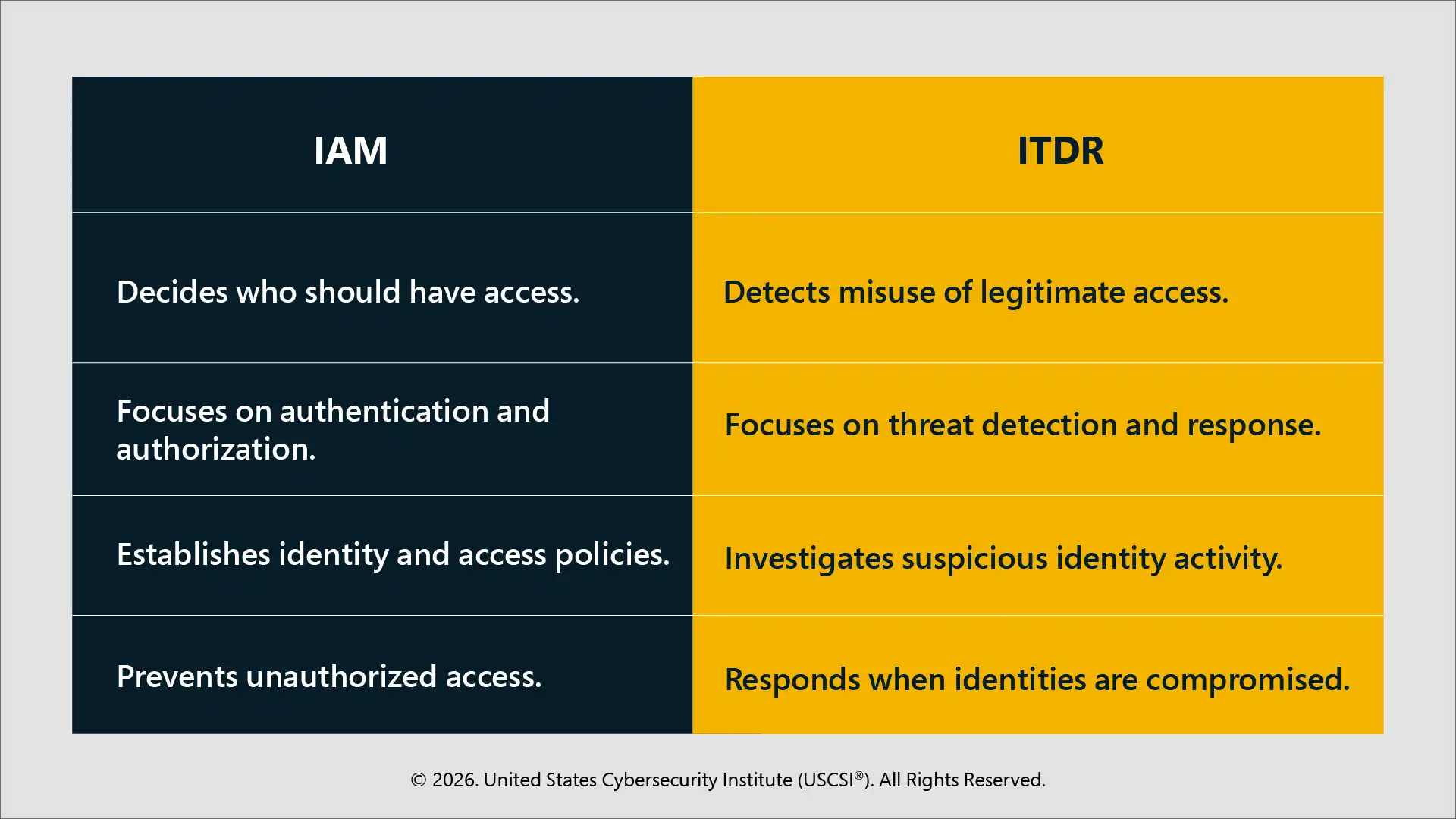
If Identity and Access Management (IAM) determines who should have access, ITDR ensures that access is not being abused.
Why Identity Has Become the New Attack Surface
The traditional network perimeter is not really a thing anymore. Remote work, cloud adoption, and an expanding set of third-party integrations have reshaped how organizations operate, and identity has ended up at the center of that shift.
Identity security by the numbers:
- According to the 2026 Identity Security Landscape Report, 83% of organizations faced at least two successful identity-centric breaches over the past year.
- The CrowdStrike 2026 Global Threat Report found that the average eCrime breakout time dropped to just 29 minutes, with the fastest breakout on record taking only 27 seconds.
Numbers like these make one thing clear: prevention by itself is not enough. Organizations need to actively monitor identity-based threats and respond in real time, not after the fact.
What ITDR Means in Practice
ITDR looks past whether a login matches valid credentials and asks what is happening around it:
- Is the user signing in from somewhere they've never logged in from before?
- Is the account suddenly asking for access it doesn't normally need?
- Is there odd movement between systems?
- Does any of this line up with how the user usually behaves?
Keep an eye on these signals long enough, and security teams get a real chance to catch a compromised identity before an attacker gets any further.
How ITDR Works
Every solution is a little different, but four capabilities tend to show up across most effective ITDR programs.
1. Continuous Identity Monitoring
ITDR tracks identity-related events across environments like:
- Active Directory
- Cloud identity providers
- SaaS applications
- Privileged accounts
- Hybrid infrastructures
That gives organizations a much clearer view of how identities actually get used.
2. Behavioral Analytics
ITDR figures out what "normal" looks like for each user, then watches for anything that breaks the pattern.
Some examples:
- Logins at unusual times
- Impossible travel scenarios
- Sudden increases in privileged activity
- Access requests outside typical job responsibilities
3. Threat Detection
Modern ITDR tools recognize the techniques attackers tend to fall back on once they have compromised an identity, like:
- Credential theft
- Privilege escalation
- Kerberoasting
- Pass-the-Hash attacks
- Multi-Factor Authentication (MFA) bypass attempts
- Lateral movement using valid accounts
4. Automated Response
When something suspicious turns up, the response needs to be fast. Depending on the situation, that could look like:
- Disabling compromised accounts
- Requiring additional authentication
- Revoking elevated privileges
- Alerting security teams
- Isolating affected sessions
These measures reduce the likelihood of attackers expanding their foothold within the environment.
Why Traditional Security Approaches Are Falling Short
Organizations have well established investments in security such as firewalls, endpoint protection platforms, Identity and Access Management solutions etc.
These technologies did not, however, have a dedicated focus on identity misuse.
For example:
- The boundaries of the network are protected by firewalls.
- Endpoint Detection and Response (EDR) is device-based.
- Permissions are controlled by IAM.
None of these solutions take the time to continuously monitor and assess if legitimate identities are acting maliciously after they have been authenticated.
It's here that ITDR comes in.
ITDR does not supplant controls but enhances them by adding a layer of identity visibility and response.
ITDR vs IAM: Understanding the Difference
Organizations require both capabilities to build a resilient identity security strategy. Although they are closely related, ITDR and IAM serve different purposes.
A Real-World Example of ITDR in Action
An employee at a financial services company gets phished. The attacker now has working credentials and logs in without any issue. From there, they go after:
- Sensitive databases.
- Higher-level roles than the employee actually holds.
- Other systems, moving sideways across the network.
Without ITDR in place, none of this stands out. The credentials are valid, so as far as most tools are concerned, everything checks out.
With ITDR running, the unusual access patterns and privilege requests trigger an alert right away. Automated policies kick in, requiring extra authentication and limiting account access until someone confirms what's going on.
What might have turned into a major breach gets caught and contained early.
Why ITDR Matters for Organizations Today
Secure identity is more than an IT issue; it is a business imperative. ITDR capabilities will be of help to organizations by:
- Finding identity attacks earlier.
- Minimizing the period of time an attacker stays inside the organization.
- Strengthening the organization's zero trust security strategies.
- Increasing the efficiency of the response to incidents.
- Safeguarding the organization's critical business operations.
- Building trust among stakeholders.
As highlighted in USCSI® analysis of today's leading cybersecurity challenges, organizations are increasingly facing sophisticated threats that exploit gaps in visibility and preparedness. Strengthening identity security has therefore become an important component of building long-term cyber resilience.
Alongside this, the focus on identity protection is reshaping what skills are in demand. People with expertise in identity security, threat detection, and incident response are increasingly sought after, and USCSI® cybersecurity certifications help professionals keep their knowledge current with how threats keep evolving.
Looking Ahead
Digital ecosystems are not slowing down, and identity security will only matter more as they grow. What organizations build into their identity defenses now will shape how well they handle what comes next.
Worth keeping an eye on:
- Improving visibility across increasingly complex identity landscapes.
- Speeding up detection and response to identity-based threats.
- Building the skills and awareness needed to keep pace with new security challenges.
Organizations that put in the work on these fronts now will be in much better shape down the line.
FAQs
What skills are most valuable for professionals working with ITDR solutions?
Knowledge of IAM, threat detection, behavioral analytics, SIEM tools, and incident response is highly valuable for ITDR-related roles.
What is the salary outlook for identity security professionals?
Professionals specializing in identity security and threat detection often command a US$ 150,000+ salary due to the growing demand for identity-focused expertise.
What trends are shaping the future of ITDR?
AI-driven threat detection, protection of non-human identities, and deeper integration between IAM and security operations are emerging as key ITDR trends in 2026 and beyond.