Inside Whaling Attacks: How Executives Are Targeted | Infographic
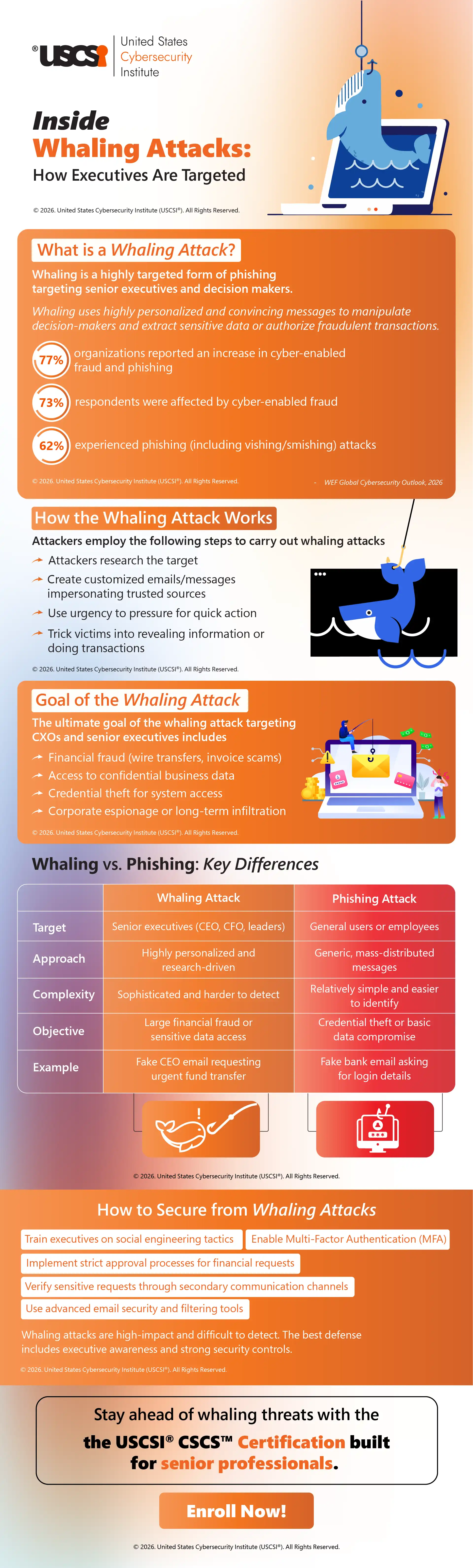
Whaling attacks are among the most dangerous cybersecurity threats in 2026, targeting CEOs, CFOs, and senior executives through highly personalized phishing emails designed to manipulate decision-making and trigger fraudulent actions. These attacks rely on trust exploitation, urgency, and impersonation of legitimate business communication to bypass standard security checks.
According to the 2026 Data Breach Investigations Report (DBIR) by Verizon Business, 62% of data breaches involved a human element, showing how attackers continue to exploit human behavior through phishing, social engineering, and credential misuse. This makes awareness and behavior-based defense critical for modern cybersecurity strategies.
A Whaling Attack is a specialized form of phishing where attackers conduct detailed research on executives and craft convincing messages that appear to come from trusted internal or external sources. These attacks often aim to achieve financial fraud, credential theft, data leakage, or long-term corporate infiltration.
Modern phishing threats are increasingly powered by AI-driven personalization, making them harder to detect even for trained cybersecurity professionals. Attackers use fake invoices, urgent payment requests, and executive impersonation to increase success rates.
To counter these risks, organizations should invest in cybersecurity certification programs, advanced email security systems, and continuous development of cybersecurity skills across leadership and staff to strengthen organizational resilience in 2026.
In this infographic, we will explore how whaling attacks work and the most effective defense strategies to protect organizations in 2026.