Prompt Security in Enterprise AI: The Invisible Security Layer of Enterprise AI | Infographic
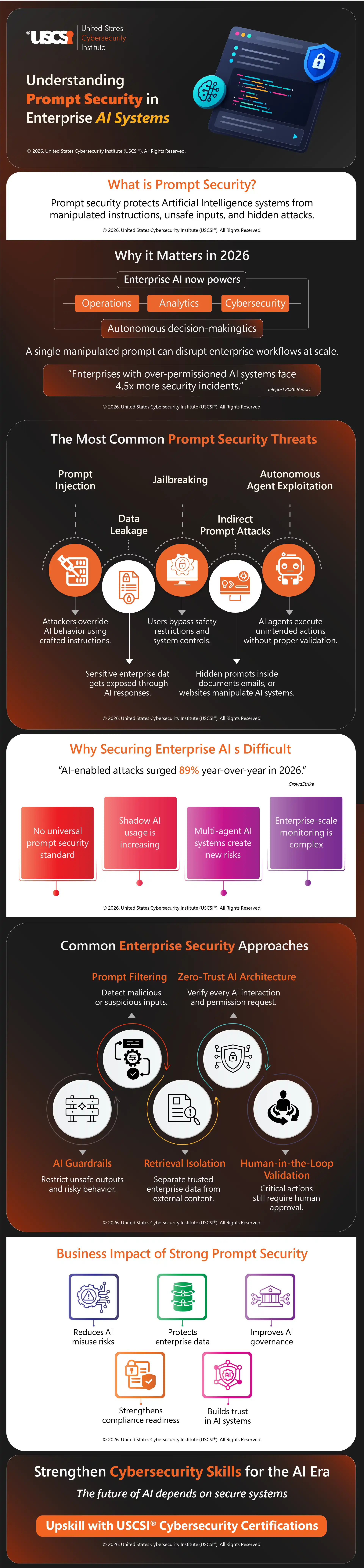
AI adoption inside enterprises is growing fast. The security risks are growing with it. Large language models are now part of customer support, internal operations, cybersecurity, and decision-making across many industries. This brings clear business value. But it has also created gaps that attackers are actively exploiting. Prompt-based attacks are no longer occasional. Injection attempts, jailbreaks, data leakage, and instruction manipulation are showing up in live systems every day.
According to Gartner, 57% of employees use personal generative AI accounts for work purposes, while 33% admit entering sensitive information into unapproved AI tools in 2026. The growing use of unmanaged AI systems is increasing enterprise exposure to prompt injection risks, unauthorized data access, and broader Generative AI Security risks.
Modern prompt security approaches combine technical controls with human oversight. Some enterprises rely on layered defense architectures, while others focus on secure prompt engineering, AI guardrails, retrieval isolation, and restricted workflows. Each approach offers advantages, but no single method fully eliminates risk.
As enterprise AI systems become more autonomous and interconnected, prompt security is shifting from an optional safeguard to a foundational requirement for responsible AI deployment. The infographic below explores the strengths, weaknesses, common approaches shaping prompt security in enterprise AI in 2026, and how cybersecurity certifications help in building skills to secure modern AI systems.