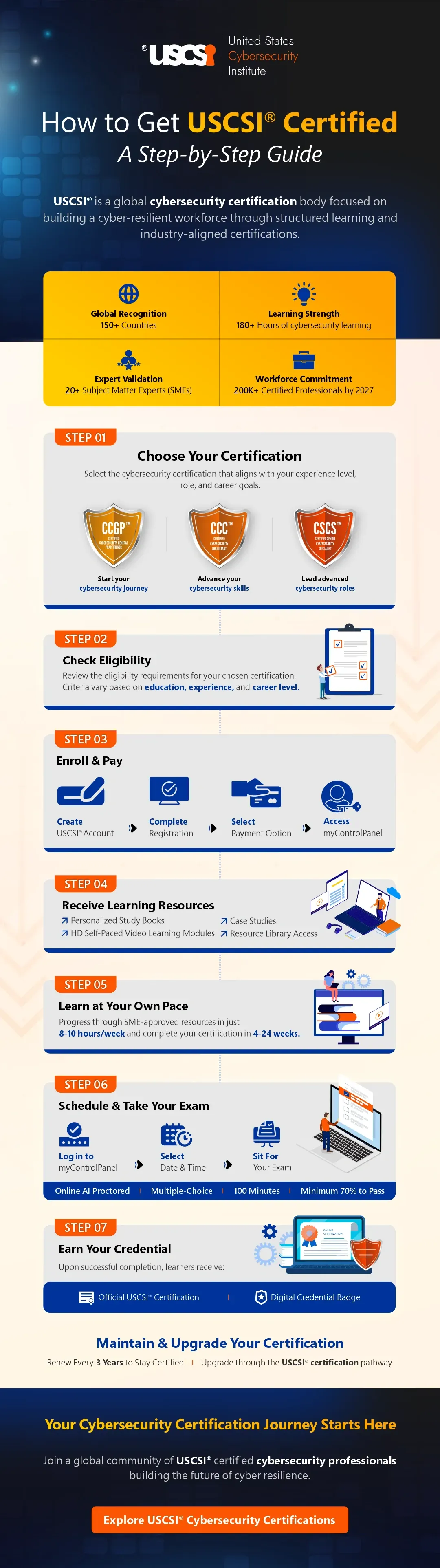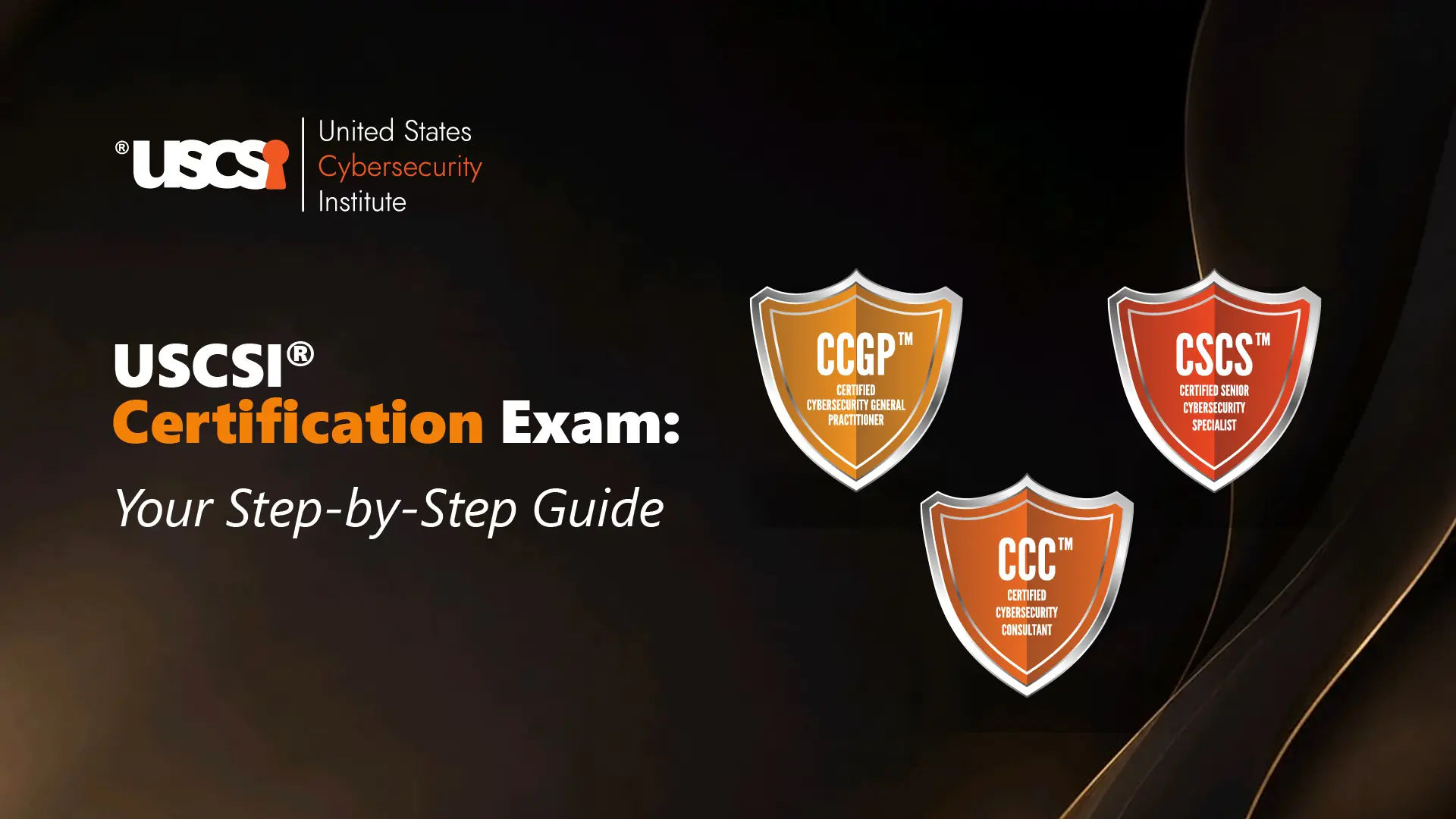
How to Get USCSI® Certified: A Step-by-Step Guide
Every organization that runs on digital infrastructure carries risk, and that risk is growing. The spread of cloud environments, AI-integrated systems, and interconnected devices has expanded the attack surface faster than most security teams can manage. Cybersecurity is no longer a back-office concern. It sits at the center of operational strategy.
The talent problem compounds this. Fortinet's 2026 Global Cybersecurity Skills Gap Report found that 60% of organizations struggle to find cybersecurity professionals with the AI fluency and advanced technical skills the role now demands. That shortage is not a new phenomenon, but its consequences have become harder to absorb, more frequent breaches, longer recovery windows, and mounting financial exposure.
What has changed is how organizations are responding. Technology investments alone are not closing the gap. The focus has shifted to professionals who can read an environment, locate its weaknesses, neutralize active threats, and help build the kind of resilience that holds under pressure. That practical capability is what employers are now hiring for, and it is what cybersecurity certifications are increasingly expected to confirm.
Structured cybersecurity certification programs have become one of the more reliable ways to develop and validate that kind of readiness. They give professionals a clear learning path, grounded in how security work actually functions rather than how it appears in textbooks.
USCSI® cybersecurity certification pathway moves learners from core foundational concepts through to advanced-level expertise, with each stage mapped to the skills organizations need.