
How to Build a Career in Security Architecture in 2026
Security architecture has emerged as one of the most demanding and highest-compensated specializations in cybersecurity. According to Glassdoor's June 2026 data, the average Security Architect salary in the United States is $231,000 per year, with most professionals earning between $183,382 and $295,115 annually.
Security architects carry the responsibility of designing the systems that protect an organization's most critical infrastructure, often well before a developer writes the first line of code or an engineer provisions the first server.
The path to this role is well established, though it requires sustained, deliberate progression. The sections below outline exactly what that path looks like.
What Does A Security Architect Do?
At its core, a Security Architect builds the security framework an organization leans on to protect its networks, applications, and data. It is a role that is somewhere between strategy and hands-on technical work.
- Designing secure network, application, and cloud architectures from scratch.
- Setting security policies, standards, and reference architectures across the company.
- Vetting new technologies and vendors for risk before anyone signs off on adoption.
- Working closely with engineering, compliance, and leadership to keep security aligned with business priorities.
- Leading incident response planning and running threat modeling exercises.
A security analyst typically watches for threats and reacts to them in real time. A security architect, on the other hand, builds the structural defenses that decide how resilient the organization actually is to begin with.
Security Architect Vs. Other Cybersecurity Roles
Security architecture occupies a distinct tier in the cybersecurity career hierarchy, bridging hands-on technical execution and strategic decision-making. The table below positions the role against other key functions to clarify where it fits and what sets it apart.
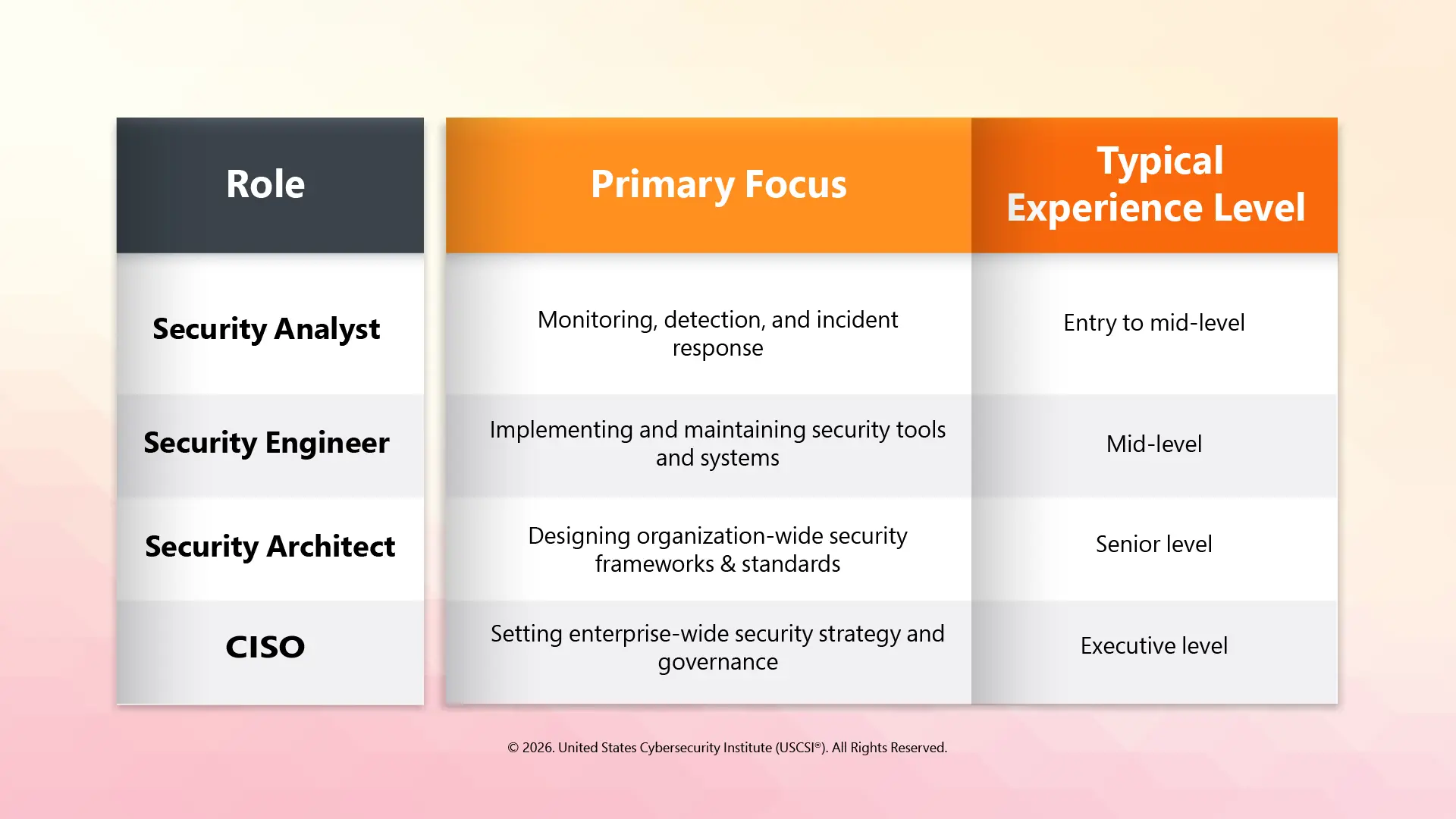
Also explore The 2026 Cybersecurity Career Switch Playbook to know about roles, skills, certifications, and salary insights to plan your move into cybersecurity with clarity.
Let’s discuss now a stepwise approach on how to become a security architect.
Step 1: Build A Foundation In IT And Networking
Every security architect starts usually with core IT and networking. Without this groundwork, none of the architectural decisions that come later have anything solid to stand on. Listed below are the foundational pieces to focus on first.
- Gain understanding of networking basics: TCP/IP, DNS, firewall and VPNs.
- Develop basic understanding of operating systems on Windows, Linux and cloud environments.
- Learn system administration and infrastructure design concepts.
- Gain practical experience with enterprise IT environments by entering the workforce with entry-level IT or network positions.
- This stage usually takes two to four years, often spent in roles like network administrator, systems administrator, or IT support specialist.
Step 2: Develop Core Security Architecture Skills
Once the IT foundation is solid, it is time to build the skill set that actually defines security architecture work, including:
- Threat modeling and risk assessment methodologies.
- Secure network and application design principles.
- Identity and access management (IAM) architecture.
- Encryption, cryptographic protocols, and key management.
- Familiarity with frameworks like NIST, ISO/IEC 27001, and Zero Trust architecture.
Step 3: Gain Hands-On Cybersecurity Experience
Security architecture is not an entry point; employers expect real time already spent in adjacent, hands-on roles. Here is what that stretch typically involves.
- Spend three to five years in roles like Security Analyst, Security Engineer, or Penetration Tester.
- Get involved in actual incident response and vulnerability assessment work.
- Take ownership of smaller architectural decisions before stepping up to enterprise-wide design.
Here theory turns into judgment, and it is what separates a credible security architect from someone who just holds the title.
Step 4: Earn the Right Cybersecurity Certifications
Cybersecurity certification programs build the structured knowledge that complements hands-on experience, and they remain one of the clearest signals employers look for when hiring into senior security roles.
For professionals aiming specifically at security architecture, USCSI® offers two relevant paths. The Certified Cybersecurity Consultant (CCC™) builds hands-on skills in designing secure cloud environments, enrolling and managing certificates, and building and executing real security architecture, making it a strong fit for professionals still developing their architectural foundation.
For those operating at a more senior, strategic level, the Certified Senior Cybersecurity Specialist (CSCS™) builds the skills to lead security strategy, govern enterprise risk, and evaluate AI systems at an organizational level.
Also read USCSI® insight on Cybersecurity Learning and Certification Roadmap for Professionals in 2026 and Beyond that lays out the roadmap, covering the full progression from beginner to expert, helping professionals map exactly where their current skill level sits and what comes next.
Step 5: Specialize in Cloud Security And Beyond
Modern security architecture barely exists separately from cloud infrastructure anymore, so specializing here gives candidates a real edge.
- Build deep expertise in securing AWS, Azure, or Google Cloud environments.
- Get familiar with cloud-native security tools, container security, and infrastructure-as-code security practices.
- Position yourself as a cloud security specialist within the broader security architecture field.
- Stay on top of emerging challenges, including securing AI systems and agentic workflows.
This is the difference between a generalist security architect and one who commands premium pay and leads enterprise-wide cloud transformation work.
Once you have picked a certification target, the USCSI® guide How to Get USCSI Certified: A Step-by-Step Guide walks you through the full enrollment and exam process from start to finish.
The Way Forward
Becoming a security architect is not a fast track. It is a multi-year build, made up of a solid IT foundation, real hands-on cybersecurity experience, the right certifications, and increasingly, real depth in cloud security.
The professionals who move through this path fastest treat every step as a building block instead of a box to check, and they pair every certification with real, applied work along the way. Start your learning journey today and become a competent security architect.
FAQs
How many years of experience are typically required to become a security architect?
Most security architects bring five to ten years of combined cybersecurity and IT experience before stepping into the role.
Is a degree required to become a security architect, or can certifications substitute for one?
Many hold a degree in computer science or a related field, but certifications paired with hands-on experience can substitute for one at many organizations.
What industries hire the most Security Architects?
Finance, healthcare, technology, and government consistently hire the most security architects, driven by regulatory requirements and the sensitivity of the data they handle.