Who is a Cybersecurity Specialist and How to Become One?
The cyberthreats today are not as simple as they used to be a few years back. Further, advances in technology, widespread adoption of cloud environments, and an increase in interconnected devices have made modern cyber-attacks more complex, sophisticated, and high in volume.
These attacks can disrupt national infrastructure and cripple global enterprises. Therefore, cybersecurity is not just a technical function but a critical leadership responsibility. Cybersecurity Specialists, along with enhancing their organization’s security posture, contribute to making informed and risk-aware decisions.
71% of global organizations say cyber risk is now a board-level concern, not just an IT issue, underscoring the strategic role of CISOs and security leaders (Source: WEF Global Cybersecurity Outlook 2026).
These senior cybersecurity professionals support compliance and cyber resilient strategies. Cyber risks have a great influence on brand reputation, regulatory mandates, and important business decisions, which has made cybersecurity specialists the trusted advisors powering secure growth.
It is one of the most in-demand cybersecurity job roles and a highly rewarding cybersecurity career path. But what exactly does a cybersecurity specialist do, and what does it take to become one? Let’s explore.
Who is a Cybersecurity Specialist?
Cybersecurity specialists are skilled and senior-level cybersecurity professionals responsible for protecting their organization's digital assets and infrastructure, including networks, systems, data, applications, and even users, from evolving cyber threats.
Only 12% of organizations describe their AI governance committees as mature and proactive, highlighting a leadership and governance maturity gap that CISOs are expected to address (source: Cisco Security Benchmark Survey).
Their primary task is to detect, prevent, and respond to security incidents while ensuring the CIA (confidentiality, integrity, and availability) of information.
They may also be found designing security strategies and managing security implementation across their organization’s business functions. They help formulate security policies and may be involved in cybersecurity training for their employees.
According to Glassdoor, the median total pay of cybersecurity specialists is $1,23,291 per annum in the US.
How to Become a Cybersecurity Specialist: Step-by-step Path
If you want to grow in your career to this advanced cybersecurity job role, then you can follow this simple yet effective cybersecurity specialist roadmap.
- Build a strong foundation in basic Cybersecurity concepts
Start by mastering basic concepts like networking, operating systems, basic scripting, and security terminologies. A solid foundation will help you understand advanced security concepts easily, further in your career.
- Learn core cybersecurity concepts
The next step is learning the core threat concepts like different types of threats (malware, ransomware, DDoS attacks, etc.), cryptography, Identity and Access Management, network and application security, etc.
- Gain practical hands-on experience
Apart from theoretical knowledge, practical hands-on experience is as important. Leverage open-source tools, capture-the-flag competitions, set up virtual labs, contribute to open-source projects, and gain enough hands-on experience on real-world projects.
- Choose specialization
As you advance in your career, you can specialize in areas such as:
- Security Operations (SOC)
- Penetration Testing
- Cloud Security
- Application Security
- Governance, Risk, and Compliance (GRC)
These specializations will further enhance your job prospects.
- Get certified
Employers highly prefer certified candidates. Cybersecurity certifications will help you gain the required skills and knowledge, validate your expertise, and demonstrate your commitment to excellence among employers.
Now that you are aiming to become a Cybersecurity Specialist and advance into leadership roles, you must also read AI Economy 2026: Top Cybersecurity Predictions Leaders Must Know. This insightful read discusses where cybersecurity is heading and how leaders can eliminate modern threats effectively.
56% of cybersecurity leaders say they lack sufficient authority to influence enterprise-wide risk decisions, despite rising accountability at the executive level.
WEF Report 2026
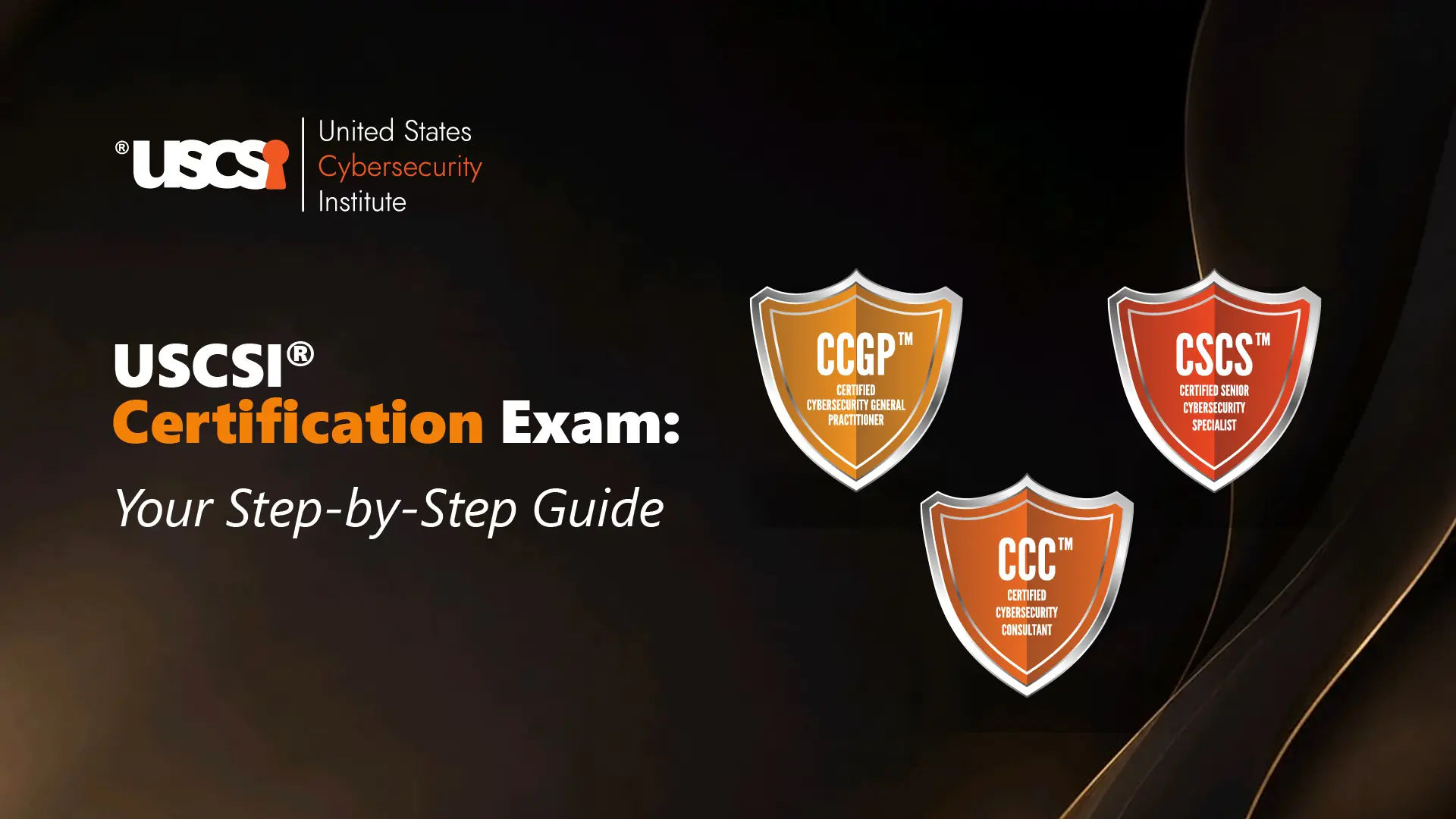
Certified Senior Cybersecurity Specialist (CSCS™) – The Credential You Need
The Certified Senior Cybersecurity Specialist (CSCS™) by the United States Cybersecurity Institute (USCSI®) is among the best cybersecurity specialist certifications that empower senior professionals with essential cybersecurity leadership skills and knowledge.
Through this certification, you can learn:
- How to secure data
- Various cryptographic techniques
- Security leadership and regulations
- Leveraging AI in cybersecurity
- Risk management, control, and more
CSCS™ can be completed within 4-25 weeks and comes with free study materials like eBooks, lecture videos, and practice codes, helping professionals learn at their own pace. Upon successful completion, learners get a globally recognized certification and digital badge to demonstrate their accomplishment.
Key Responsibilities of Cybersecurity Specialists
Cybersecurity specialists are involved in a variety of cybersecurity tasks depending upon their organization, role, and experience level. Some of their common tasks include:
- Monitor and detect threats
They continuously monitor their systems and networks to detect and eliminate suspicious activities using advanced cybersecurity tools such as SIEM, IDS/IPS, and endpoint protection platforms
- Vulnerability assessment and risk management
Cybersecurity specialists, along with penetration testers, also see if there are any security vulnerabilities in their organization’s infrastructure through vulnerability scans, configuration reviews, and risk assessments. Once done, they recommend essential steps to eliminate vulnerabilities and keep the assets secured.
- Incident response and investigation
Despite all the efforts, cyber-attacks are inevitable. Therefore, security specialists must also prepare to respond to incidents. They help with timely detection and contain the threats. They are also involved in investigating the root causes, minimizing damage, and assisting in disaster recovery.
- Implementing security controls
In some organizations, these cybersecurity experts are responsible for designing and implementing security controls like deploying and managing firewalls, encryption, access controls, endpoint security, IAM solutions, etc.
- Policy, compliance, and awareness
Cybersecurity specialists, in several cases, have to enforce security policies and ensure their organizations comply with industry standards and regulations like GDPR, HIPAA, ISO, etc. They have to conduct regular cybersecurity training and awareness programs to empower their employees with the latest threat vectors, cybersecurity trends, and best practices.
According to the recent WEF report, only 38% of organizations believe their cybersecurity leadership is adequately prepared to manage AI-driven cyber risks, pointing to a major leadership skills gap.
What Skills do Cybersecurity Specialists Need?
Did you know that a recent Check Point security report highlighted that more than 70% of organizations report difficulty hiring qualified cybersecurity specialists, primarily due to skills gaps in cloud security and incident response?
Professionals who want to grow in this cybersecurity career path must have these essential cybersecurity skills and knowledge:
Technical skills:
- Strong foundation in networking concepts like TCP/IP, DNS, firewalls, VPNs, etc.
- Knowledge of various operating systems, including Windows, Linux, and macOS
- Basic security concepts like encryption, authentication, IAM, etc.
- Familiarity with vulnerability management and patching tools
- Proficiency in security programming languages like Python, Bash, or PowerShell
- Understanding of SIEM, EDR, IDS/IPS, vulnerability scanners, and other cybersecurity tools
- Knowledge of cloud security, application security, and IoT security
Along with these, they should also know about the evolving and emerging threats like AI-powered attacks, AI agent threats, vibe coding security risks, etc.
Soft skills:
- Analytical and problem-solving skills
- Good communication and collaboration skills
- Should be able to work under pressure, and at all times
- Must have an ethical mindset and attention to detail
With these traits and skills, along with relevant recognized cybersecurity certifications, succeeding in this career path can become quite easier.
Final thoughts!
Cybersecurity specialists have to play a very important role in protecting their organization’s assets and data. Depending upon their organization, industry, and experience level, they have to wear many hats and perform different kinds of tasks.
As the number of cybersecurity incidents grows exponentially, the demand for these skilled professionals is higher than ever.
With strong foundational knowledge and specialization, along with credible USCSI® certifications like CSCS™, individuals can ace this career path.
Frequently Asked Questions
- Is cybersecurity a good career choice for non-technical professionals?
With structured learning and cybersecurity specialist courses, even non-technical professionals can learn basic to advanced concepts in cybersecurity and transition into entry-level cybersecurity roles.
- Who can enroll for the Certified Senior Cybersecurity Specialist (CSCS™) certification?
Graduates from any discipline (preferably STEM) with 3-7 years of work experience in IT, programming, Linux, or computer science are eligible to earn CSCS™ certification.
- How long does it take to become a cybersecurity specialist?
Depending upon your prior technical knowledge, educational qualification, and work experience, you can become a cybersecurity specialist within 3-7 years.
- What industries hire cybersecurity specialists the most?
Almost all industries, including IT, healthcare, finance, government, e-commerce, manufacturing, and others, are always looking to hire skilled and efficient cybersecurity specialists.